
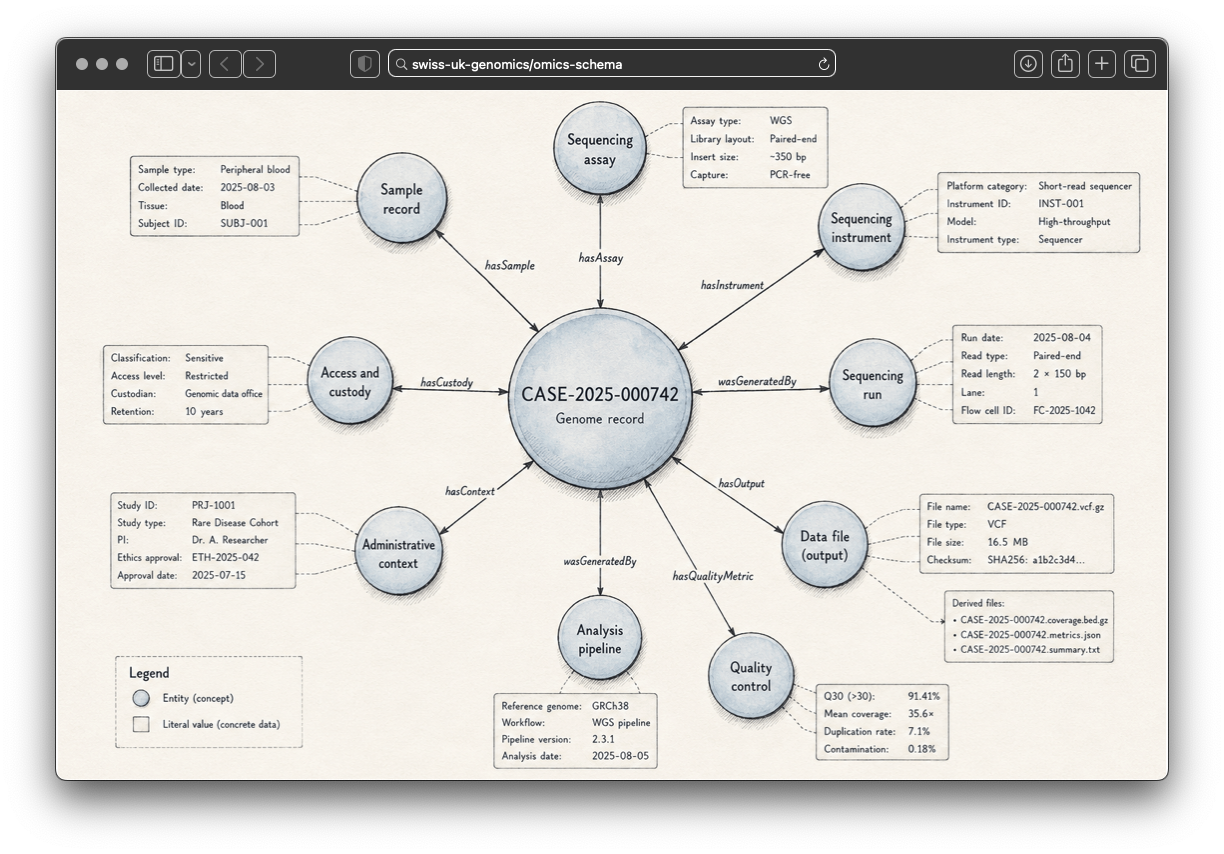
Omics schema
International and SPHN-aligned genomic and omics semantic mappings for structured, machine-readable clinical and research data.
The technology is here. The trusted handoff is missing.
Labs, hospitals and companies already have powerful genomic systems. What they lack is a shared way to pass genomic information between them with its meaning intact. This project builds that handoff, creating more value for research, healthcare and industry.

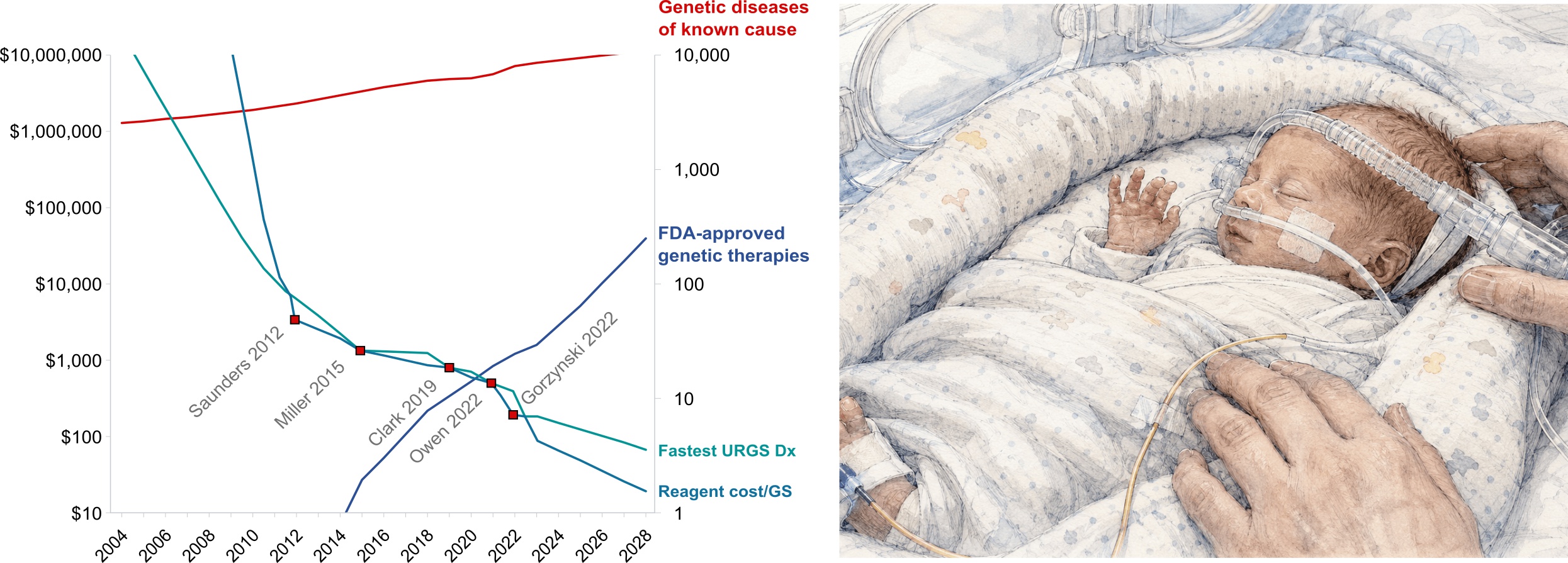
In critical care, the value of a diagnosis is often measured in hours. In a 2025 neonatal intensive-care study, a same-day genome-sequencing workflow detected a pathogenic variant in an infant with tonic seizures, identifying a genetic epilepsy syndrome responsive to sodium-channel blockers. The fastest interpreted report was produced in 6 hours 47 minutes. Across 44 intensive-care studies, rapid genomic testing produced a diagnosis in 37% of children, changed clinical management in 26%, and reduced net healthcare costs by $14,265 per child tested (Wojcik et al., 2025; Kingsmore et al., 2024).
The same principle applies across precision medicine. Switzerland and the United Kingdom already have complementary expertise in sequencing, AI, drug discovery, genomic engineering and gene therapy, distributed across hospitals, universities, laboratories, biotechnology and technology companies. The missing element is a reliable way for their data, evidence and analytical outputs to move between systems. This project creates that shared, verifiable handoff, allowing partners to keep their existing systems and intellectual property while shortening the path from discovery to treatment and from technology to adoption.
The project
Genomics already supports precision medicine, healthcare, research, drug discovery and pharmaceutical R&D. But genomic information can still lose its meaning when it moves between organisations and systems.
We are bringing Swiss and UK partners together to build and prove the shared standards that make those handoffs work.
Different systems still require repeated translation, integration and verification. World-class systems cannot communicate.
Swiss and UK partners will test common standards across independent organisations and real genomic workflows.
Labs, hospitals, researchers and companies keep their exiting tools. The semantic layer removes repeated custom mapping, so data can move between systems with its meaning intact.

Swiss and UK participants are invited to submit proposals for joint research and development projects that lead to innovative applications and products with strong commercial potential in both Switzerland and the UK. This bilateral call is open exclusively to Swiss and UK partners and aims to strengthen cross-border innovation collaboration. This project is being developed for the Switzerland-UK bilateral call, supported by Innosuisse and Innovate UK. For more information see the Innosuisse, Swiss Innovation Agency call page.
Genomics already operates at population, healthcare and commercial scale. The project addresses the remaining interoperability gap between independent systems.
Genomic information already moves at scale between healthcare, research and industry. The business need is broader than national sequencing programmes: hospitals, laboratories, software platforms, service providers, clinics and SMEs all need genomic outputs that can be understood, verified and reused without repeated custom mapping.
Start from working standards and implementations, then standardise the handoff between independent genomic systems rather than the algorithms themselves.
The consortium combines genomic data generation, healthcare, research, scientific methodology, software implementation and commercial adoption across Switzerland and the UK.
The primary adopters are genome centres, hospitals, diagnostic laboratories, software providers and biotechnology and pharmaceutical companies that generate, analyse or consume genomic information.
Traction already exists with working standards and reference implementations. The project connects them, removes interoperability bottlenecks and validates adoption through real partner workflows.
Open specifications, mappings, reference implementations and conformance tools are designed for independent adoption beyond the initial Swiss-UK consortium.
Genomics already attracts major healthcare, academic and commercial investment. The project adds value by reducing repeated semantic mapping, metadata translation and IT integration, while making genomic services easier to sell, accept and reuse across organisations.
Five foundations for one trusted genomic handoff, connecting rare-disease diagnosis, pharmaceutical discovery, R&D and business-to-business compatibility.
Purpose: Make genomic and omics information portable between data generators, laboratories, research environments and downstream systems.
The project will validate the shared representations and mappings for genomic data provenance, sample and sequencing metadata, machine-readable semantic structures, and alignment between national and international data models.
Outcome: A genome centre produces structured genomic metadata that can be consumed by an independent hospital, research environment or commercial analytical system without reconstructing its provenance.
Working validation: Omics schema with SPHN-aligned genomic and omics semantic mappings already support structured metadata conversion for clinical and research integration, including FAIR representations in RDF, SQL and other machine-readable formats (van der Horst et al., 2023).
Purpose: Make the criteria used to select and analyse genomic variation explicit, portable and reproducible.
The project will validate machine-readable specifications for variant selection and analysis criteria, allowing independent organisations to communicate exactly which records of genetic variation qualify for an analysis and why.
Outcome: A genomic analysis or gene panel provider can communicate both the variants reported and the criteria used to select them, allowing another organisation to reproduce or independently evaluate the analysis.
Working validation: The Qualifying Variant Framework records reusable criteria for reproducible genomic analysis, while SGA-QVSS-1.0.0 defines a portable, auditable and reusable representation of rule-based criteria for qualifying records of genetic variation (Lawless et al., 2026; Swiss Genomics Association, 2026a).
Purpose: Make genomic variant interpretation structured, portable and independently reviewable.
The project will validate structured representations for interpretation criteria, supporting evidence, classification decisions and consistent reporting, together with reference implementations and conformance mechanisms.
Outcome: A variant interpretation produced by one organisation can be inspected and independently reviewed by another organisation without depending on the originating software or reconstructing the assessment from an unstructured report.
Working validation: ACMG Validator provides a working implementation for structured ACMG/AMP variant interpretation, including evidence recording, completeness checking, internal consistency validation and structured report export (Richards et al., 2015; Tavtigian et al., 2020).
Purpose: Preserve the clinical and family context needed to understand genomic information after it changes hands, demonstrating value through real-world evaluation in healthcare and commercial workflows using structured pedigree, family history, phenotype and clinical context based on established nomenclature and interoperable healthcare standards.
Outcome: A receiving clinical or research organisation can understand the family and clinical context behind genomic information without depending on the originating software or reconstructing the record manually.
Working validation: Pedigree records relationships, phenotype and genomic findings in a structured format based on established human pedigree nomenclature and interoperable healthcare standards including HL7 FHIR (Bennett et al., 1995; Bennett et al., 2008; Bennett et al., 2022).
Purpose: Preserve the supporting evidence needed to independently assess genomic information after it changes hands, demonstrating value across healthcare, research, commercial and AI-agent workflows through structured evidence requirements, completeness and review.
Outcome: A receiving organisation can inspect the supporting evidence and assess whether declared evidence requirements have been satisfied without depending on the originating software.
Working validation: The Qualifying Evidence Matrix (SGA-QEM-1.0.0) provides an open, structured representation of declared evidence requirements and whether verifiable evidence is present or absent. QuantBayes adds a quantitative layer for assessing evidence sufficiency under those declared requirements, while QuantBayes Studio applies the same framework across scientific, clinical, commercial and AI-agent workflows without deciding whether the underlying conclusion is true (Quant Group et al., 2025; Swiss Genomics Association, 2026b).
Working foundations are already available for public access, private use, online deployment, secure offline use and partner integration.
| Implementation | Public access | Private / local use | Online | Offline secure | HPC / API | Desktop | Non-restrictive licence |
|---|---|---|---|---|---|---|---|
| WP1 · Omics schema | |||||||
| WP2 · QV standard | |||||||
| WP3 · ACMG Validator | |||||||
| WP4 · Pedigree | |||||||
| WP5 · QEM standard |
International and SPHN-aligned genomic and omics semantic mappings for structured, machine-readable clinical and research data.
A portable standard for declaring qualifying-variant criteria so genomic analyses can be audited, reused and independently reproduced.
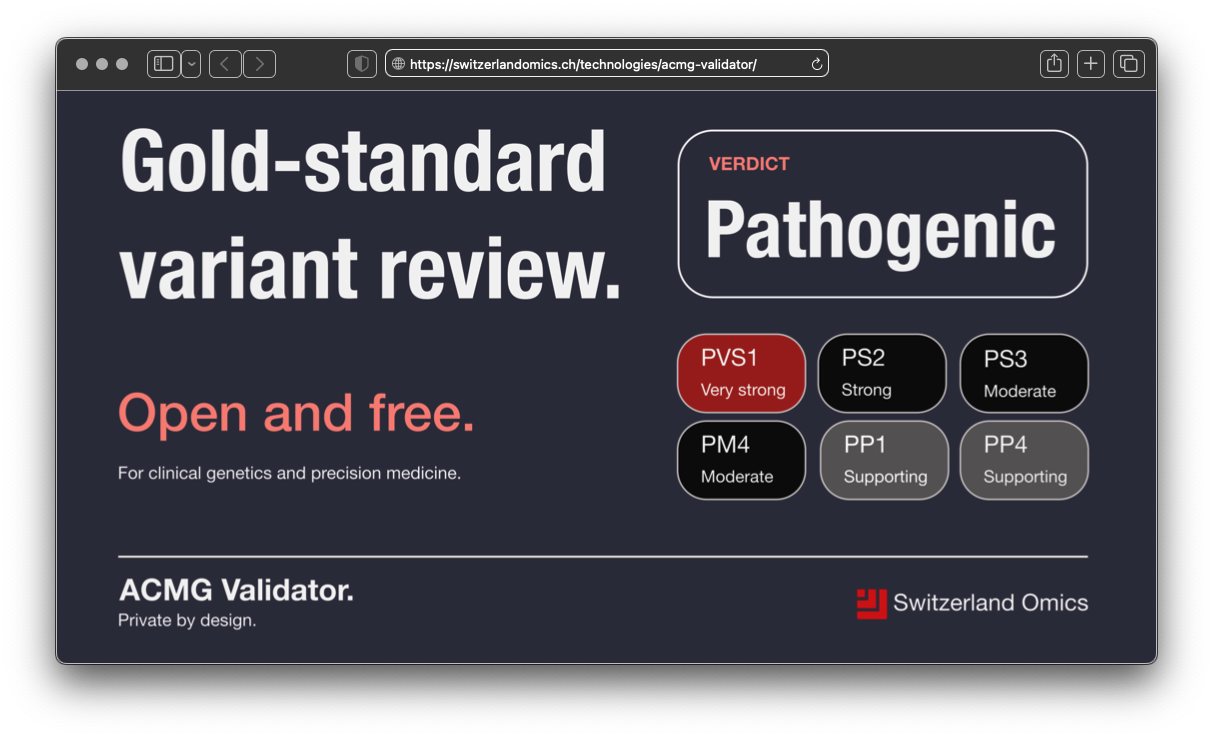
A browser-based review interface that turns ACMG/AMP variant classification into a structured evidence record.
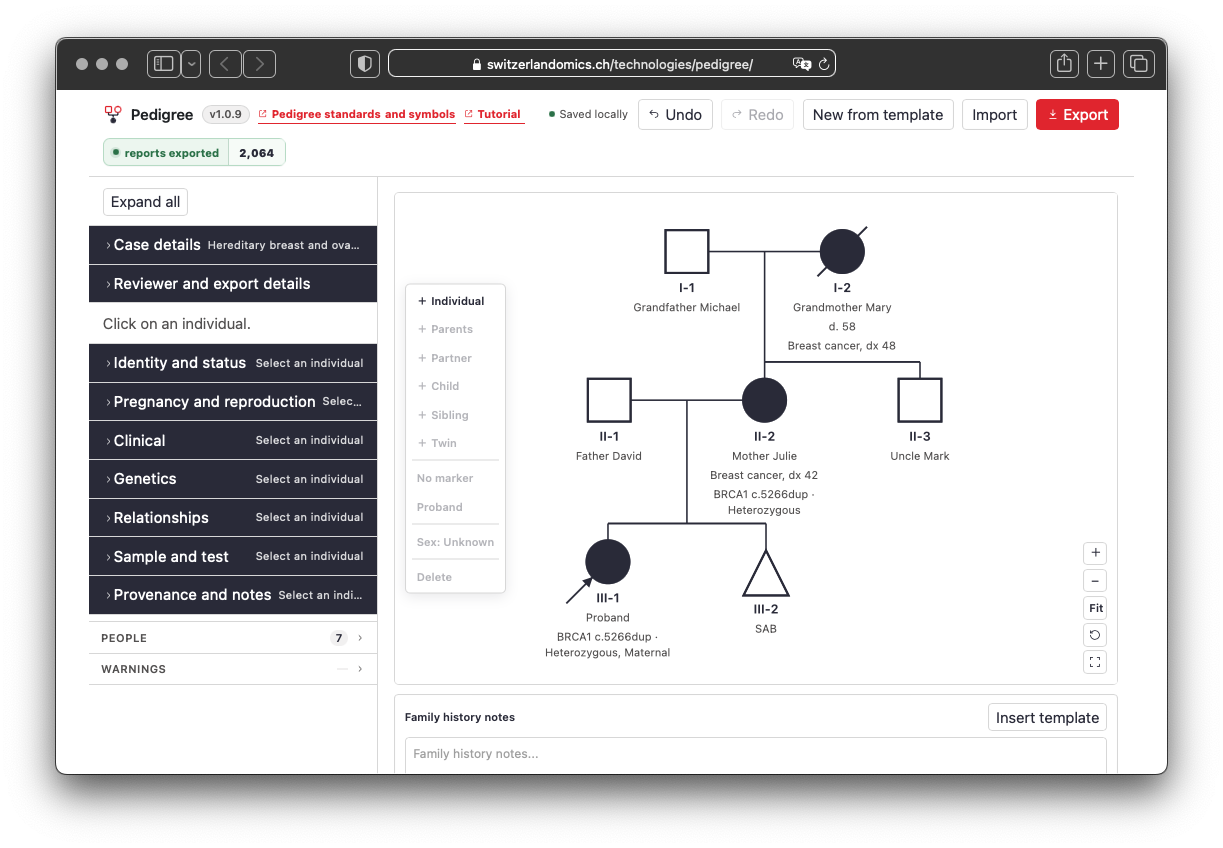
A standards-based product interface that turns family history into a clinical pedigree, report and exchangeable record.
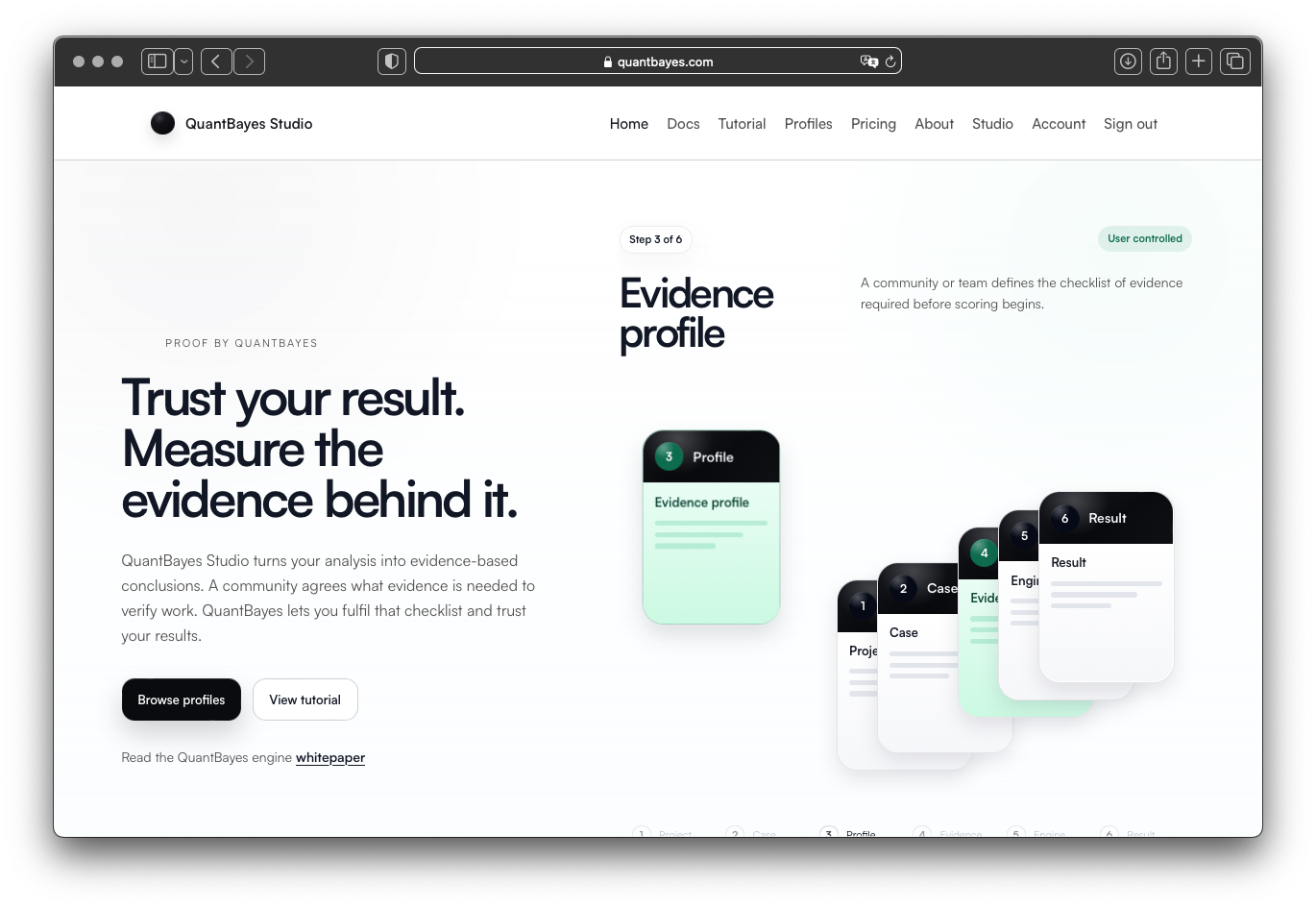
A web platform and AI-agent API for checking whether declared evidence requirements are present, missing or ready for review.
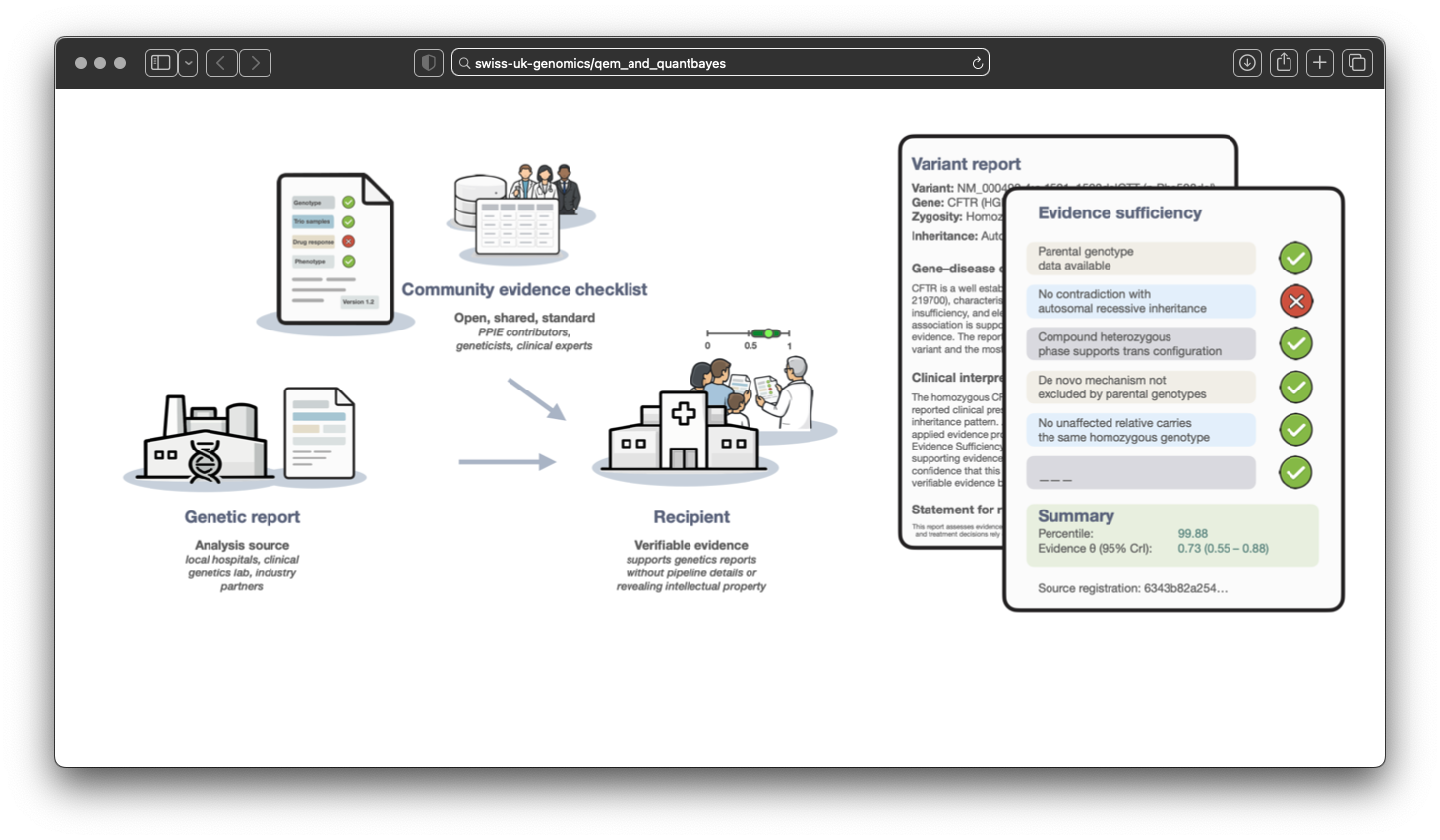
An open-source Bayesian engine for quantifying evidence sufficiency under declared requirements across genomic, scientific, clinical and automated workflows.
Keep your system. Add the trusted handoff. Measure the value.
The consortium is organised around focused partner roles, so each organisation can test the handoff in the part of the genomic workflow it already knows best. We have developed open-source conversion layer ready to use: schemas, mappings, reference tools, APIs and conformance checks. Prospective partners apply it to one existing output or workflow and measure whether it reduces cost, speeds review or increases acceptance.
| Partner | Pilot | Value |
|---|---|---|
| Genome centre / laboratory | Adopt the trusted handoff package for one existing genomic output. | Less custom formatting, easier delivery to partners and higher compatible throughput. |
| Healthcare / clinical genetics | Assess one trusted handoff package in an existing clinical review workflow. | Faster review, lower IT burden and safer use of external genomic results. |
| Academic / research group | Test one existing analysis through the reproducibility and evidence layer. | Stronger publications, easier collaboration and a clearer route from discovery to use. |
| SME / industry partner | Attach the trusted handoff package to one existing product, platform or analysis output. | More eligible customers, shorter sales friction and protected IP. |
Bilateral validation model
| Role | Switzerland | United Kingdom |
|---|---|---|
| Output adopter | [Swiss genome centre / laboratory] | [UK genome centre / laboratory] |
| Clinical reviewer | [Swiss healthcare partner] | [UK healthcare partner] |
| Independent validator | [Swiss academic partner] | [UK academic partner] |
| Product adopter | [Swiss SME / industry partner] | [UK SME / industry partner] |
No partner has to replace its pipeline, accreditation model, software product or commercial IP. Adoption starts with one handoff in one workflow. If it works, the same pattern can support future pilots, service agreements and commercial adoption.

No pipeline to replace. No IP to expose. One trusted handoff to adopt. Partners keep their existing software, regulation, accreditation and commercial products. Adoption starts where it creates value first: one output, one workflow, one partner connection. The market grows through compatibility. Genome centres deliver outputs that are easier to accept. Hospitals review external results with less reconstruction. Researchers move faster from discovery to use. Companies make products easier to trust without giving away their algorithms or product logic. Open standards and reference tools create the trust signal. Partners build clinical, research and commercial products on top.
Independent systems do not need to become the same system. They need a trusted way to connect. Healthcare gains safer access to external genomic information. Research gains reproducible criteria. Industry gains a clearer route into clinical and research markets. Success is not another standard on a website. Success is genomic information that moves faster, costs less to use and keeps its meaning across organisations and borders.
Success will be measured by practical value: lower integration cost, faster review, fewer repeated checks, clearer evidence, safer clinical use and larger compatible markets for providers.
Academic partners can make existing analyses easier to reproduce, publish, share and translate. Their pipeline does not need to change; the project adds a structured criteria and evidence layer so another lab, hospital or company can understand how the result was produced, what evidence supports it, and where it can be reused.
Healthcare partners can review external genomic information with less manual reconstruction. The trusted handoff package carries provenance, sample and QC metadata, clinical context and evidence checks in a structured format, reducing IT burden and making external results easier to assess safely without adopting the producer’s software.
Industry partners can sell into more healthcare and research settings by attaching a trusted handoff package to their existing product output. Customers receive the provenance, criteria and evidence checks they need to review the result, while the company keeps its algorithms, databases and product logic private.

The Switzerland-UK call can support substantial bilateral R&D activity, subject to the final funding rules, eligibility checks and partner budgets.
Participation does not have to mean building a new internal programme. For many organisations, the useful contribution is work they already understand: staff time, technical review, a representative dataset, an existing output, a live workflow, a pilot, a letter of support or a funded work-package role.
Switzerland Omics leads the shared technical layer: schemas, mappings, reference tools, APIs, conformance checks and partner-facing documentation. Partners bring the real setting where the handoff must work: a laboratory output, a clinical review process, a research analysis, a product export or a customer-facing workflow.
| Participation route | What it means | Suitable for |
|---|---|---|
| Funded project partner | A defined role, budget and deliverable inside the grant proposal. | Organisations ready to commit staff time, eligible costs or matched contribution. |
| In-kind validation partner | A focused test using existing workflows, staff expertise or representative outputs. | Hospitals, labs, research groups and companies that want to validate value without a large new programme. |
| Early adoption partner | A pilot, letter of support or product/service alignment around the trusted handoff. | Partners that want early access, influence on the standard and first-mover compatibility benefits. |
Join where the return is clear: one workflow, one output, one measurable improvement. Lower cost, faster review, safer reuse or easier adoption is enough to justify a focused contribution.
The project already has practical evidence of support, use and adoption.
Previous Amazon AWS funding has contributed to high-performance computing work. We are working with the Swiss Genomics Association on normative standards for open, evidence-based genomics in healthcare, research and national settings. Our software applications have generated approximately 3,000 user reports, and the underlying open-source software has received approximately 3,000 downloads this year. We are also gathering letters of interest from prospective users and partners in clinics, laboratories, research organisations and industry.
Additional applications are currently under review through the AWS Cloud Credit for Research programme, OpenAI’s Trusted Access for Biology Research programme, and Anthropic’s AI for Science rare-disease research grants.
Much of the technical work remains under active development, with six public preprints currently available through medRxiv and Preprints.org. As of 28 July 2026, the technical studies underpinning this project have received 9,001 preprint downloads. Two recently published journal articles have received a further 721 downloads. The underlying methods have also been applied this year two rare-disease studies, which have received 2,287 preprint downloads so far in studies affecting over 1,000 patients.
Bennett RL, Steinhaus KA, Uhrich SB, et al. Recommendations for standardized human pedigree nomenclature. American Journal of Human Genetics. 1995;56:745–752. DOI: 10.1007/BF01408073.
Bennett RL, French KS, Resta RG, Doyle DL. Standardized human pedigree nomenclature: update and assessment of the recommendations of the National Society of Genetic Counselors. Journal of Genetic Counseling. 2008;17:424–433. DOI: 10.1007/s10897-008-9169-9.
Bennett RL, French KS, Resta RG, Austin J. Practice resource-focused revision: standardized pedigree nomenclature update centered on sex and gender inclusivity. Journal of Genetic Counseling. 2022;31:1238–1248. DOI:
Clark MM, Hildreth A, Batalov S, et al. Diagnosis of genetic diseases in seriously ill children by rapid whole-genome sequencing and automated phenotyping and interpretation. Science Translational Medicine. 2019;11:eaat6177. DOI: 10.1126/scitranslmed.aat6177.
Gorzynski JE, Goenka SD, Shafin K, et al. Ultrarapid nanopore genome sequencing in a critical care setting. New England Journal of Medicine. 2022;386:700–702. DOI: 10.1056/NEJMc2112090. 10.1002/jgc4.1621.
Kingsmore SF, Nofsinger R, Ellsworth K. Rapid genomic sequencing for genetic disease diagnosis and therapy in intensive care units: a review. npj Genomic Medicine. 2024;9:17. DOI: 10.1038/s41525-024-00404-0.
Lawless D, et al. Qualifying Variant database: reusable criteria for reproducible genomic analysis. Bioinformatics. 2026. DOI:
Miller NA, Farrow EG, Gibson M, et al. A 26-hour system of highly sensitive whole genome sequencing for emergency management of genetic diseases. Genome Medicine. 2015;7:100. DOI: 10.1186/s13073-015-0221-8.
Owen MJ, Lefebvre S, Hansen C, et al. An automated 13.5 h system for scalable diagnosis and acute management guidance for genetic diseases. Nature Communications. 2022;13:4057. DOI: 10.1038/s41467-022-31446-6. 10.1093/bioinformatics/btaf676.
Quant Group, et al. A Bayesian model for quantifying genomic variant evidence sufficiency in Mendelian disease. medRxiv. 2025. DOI: 10.64898/2025.12.02.25341503.
Richards S, Aziz N, Bale S, Bick D, Das S, Gastier-Foster J, et al. Standards and guidelines for the interpretation of sequence variants: a joint consensus recommendation of the American College of Medical Genetics and Genomics and the Association for Molecular Pathology. Genetics in Medicine. 2015. DOI: 10.1038/gim.2015.30.
Saunders CJ, Miller NA, Soden SE, et al. Rapid whole-genome sequencing for genetic disease diagnosis in neonatal intensive care units. Science Translational Medicine. 2012;4:154ra135. DOI: 10.1126/scitranslmed.3004041.
Swiss Genomics Association. SGA-QVSS-1.0.0: Qualifying Variant Set Standard. Zenodo. 2026a. DOI: 10.5281/zenodo.20553446.
Swiss Genomics Association. SGA-QEM-1.0.0: Qualifying Evidence Matrix. Zenodo. 2026b. DOI: https://doi.org/10.5281/zenodo.17936586.
Tavtigian SV, Harrison SM, Boucher KM, Biesecker LG. Fitting a naturally scaled point system to the ACMG/AMP variant classification guidelines. Human Mutation. 2020. DOI: https://doi.org/10.1002/humu.24088.
van der Horst E, Unni D, Kopmels F, Armida J, Touré V, Franke W, Crameri K, Cirillo E, Österle S. Bridging clinical and genomic knowledge: an extension of the SPHN RDF schema for seamless integration and FAIRification of omics data. Preprints.org. 2023. DOI: 10.20944/preprints202312.0373.
Wojcik MH, et al. Toward same-day genome sequencing in the critical care setting. New England Journal of Medicine. 2025;393:2063–2065. DOI: 10.1056/NEJMc2512825.


